Is a South-Facing House Bad? An Honest Answer
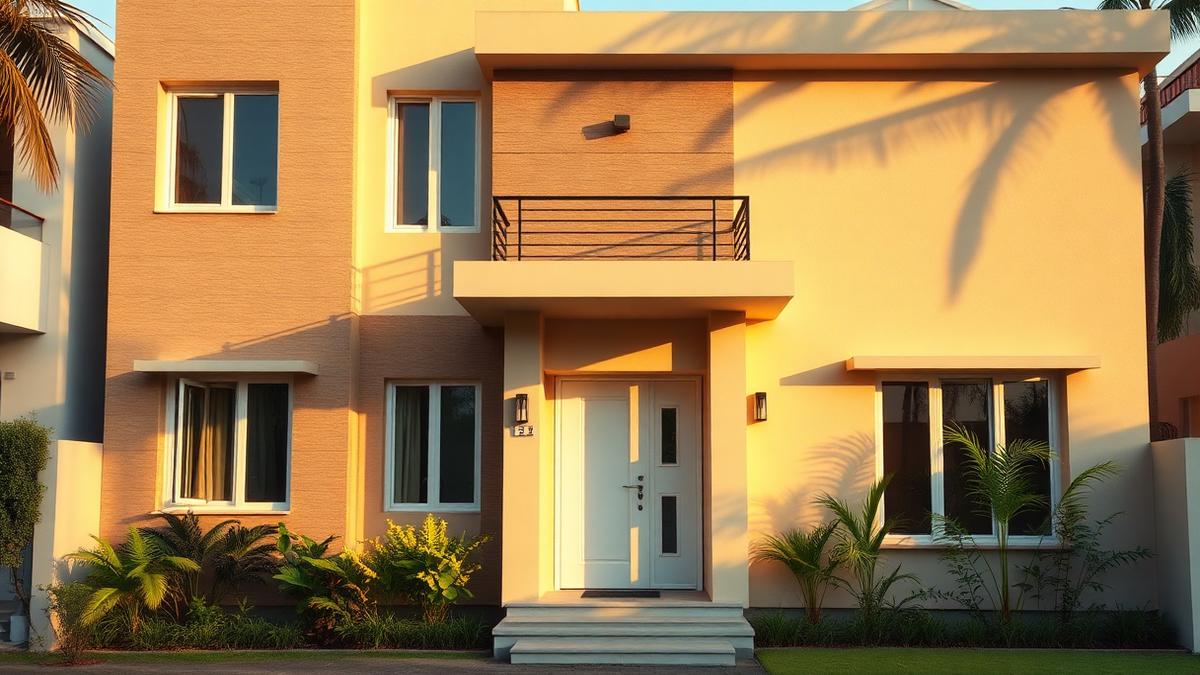
A south-facing house is not inherently bad in Vastu. The direction of the entrance is one factor among several, and the exact placement of the door within the southern wall matters more than the orientation itself. Many south-facing properties assess well.
A buyer called us last month about a flat he liked, in a location he wanted, at a price he could manage. He was ready to walk away from it because a relative had told him the entrance faced south. That call is not unusual, and the answer we gave him is the same one we give everybody.
The short answer
A south-facing house is not a defect.
The fear attached to it is out of all proportion to anything the classical texts say, and a fair amount of that fear is manufactured by people who profit from it. Rejecting a good property on orientation alone is one of the more expensive mistakes we watch buyers make.
What the classical position actually is
The south is associated with Yama in classical texts, and with weight, stability and endings. That association is where the unease originates. What gets lost in retelling is that the same texts treat the south-west as the zone of strength that anchors a home, and nobody panics about the south-west.
The more important point is about the door rather than the wall. Classical practice divides each side of a building into equal segments, called padas, and treats the segment the entrance falls in as the thing that carries meaning. A southern wall has several of these segments, and they are not read alike. Some are favourable, some neutral, one or two are avoided. So the question a consultant should be asking is not whether the wall faces south. It is where along that wall the door actually sits.
You do not need to memorise the segment names to use this. What matters is that "south-facing" describes a wall, and the texts assess a door. Two flats on the same southern facade, with entrances at opposite ends of it, are not the same property in Vastu terms, and treating them as identical is a failure of reading rather than a rule.
Why the fear is so widespread
Property agents repeat what they hear from buyers, and buyers repeat what they read. Once enough people believe south-facing units are hard to resell, they become hard to resell, and the belief confirms itself. That is a market effect, not a Vastu one.
Generic online content makes it worse by reducing a property to a single pass or fail. Direction is easy to write about because it needs no site visit and no plan. Everything that actually requires judgement gets left out, because judgement does not fit in a listicle.
A property is a system. The entrance is one input into it, alongside the kitchen, the bedrooms, the water sources, the slope and the built mass. Grading a system on one input tells you very little about the system.
How we assess a south-facing property
The reading follows the same sequence we use for any orientation, with more attention to the entrance segment.
- Where the main door sits along the southern wall, measured properly rather than estimated.
- The position of the kitchen, and whether the fire zone in the south-east is usable.
- Where the master bedroom falls, with the south-west read closely.
- Water sources, including the borewell, the overhead tank and the underground sump.
- The slope of the plot and the direction in which it drains.
- What occupies the south-west corner, since weight and height there support the rest of the layout.
- The open space around the built area and how it is distributed on each side.
Run that sequence across enough properties and a pattern becomes obvious. A south-facing house with the door in a good segment, the kitchen in the south-east and mass in the south-west reads considerably better than a north-facing house with a kitchen in the north-east, a bedroom in the fire zone and an open, sunken south-west. We see both regularly. The second one is the harder property to work with, and its owners usually bought it feeling reassured.
Main door Vastu, whichever way the house faces
Since the entrance carries most of the reading, it is worth setting out what main door Vastu covers beyond direction. The door is assessed as an object and as an approach, not only as a compass bearing, and this part applies equally to a north, east, west or south facing house.
The favoured directions for a main entrance are the north, the east and the north-east, followed by the west and the south in their better segments. What is avoided is a door in the south-west corner segment, and, in most readings we do, a door in the exact corner of any two walls.
What we look at on the door itself
- The door as the largest opening on that side, rather than a side entrance being wider than the main one.
- Opening inwards and clockwise, into the house, with a full swing and nothing behind it.
- Two shutters rather than one where the width allows, which is the traditional preference for a main entrance.
- A solid door of wood rather than a hollow or glass panel as the primary entrance.
- A threshold at the base, traditional and simple to add.
- No creaking, sticking, scraping or dragging, and hinges that are maintained.
- A nameplate that is clean and readable.
- Light on the door, since a dark entrance is the most common finding and the cheapest to fix.
What we look at in front of it
The approach is read as part of the entrance. A shoe rack, a dustbin, stored items or a cluttered passage in front of the door all count against it, and all of them are removable in an afternoon. A mirror directly facing the main door is avoided. So is a door that opens straight onto a toilet door, a staircase flight or the back door in a direct line through the house. Where a rising staircase faces the entrance, screening the lower steps is usually available without structural work, which we cover in our guide to staircase placement.
Two doors directly facing each other across a narrow passage, and a door partly obstructed by a pillar or a beam, are both findings we report and both are usually manageable in a finished home.
If you already own one
Start with the entrance measurement, because everything else is read against it. A compass reading taken at the door itself, not from a map or a memory of the site plan, will often move a property out of the segment the owner assumed it was in.
After that, the things most often adjustable are the sleeping direction, the position of heavy storage, mirror placement, the pooja (a prayer ritual) space and how the south-west is treated. None of those need construction. Where a genuine issue exists in a south-facing property, it is usually not the orientation at all. It is an internal placement that would have been an issue in any orientation.
Most south-facing homes need adjustment rather than rescue, and the adjustment list tends to be shorter than the owner feared before we arrived.
If you are buying
Take the compass reading at the door position on the plan, and find out which segment the entrance falls in before you decide anything. Then check the kitchen position, the master bedroom, where the water goes and what sits in the south-west. If those read well, the southern orientation is a discount you are being handed rather than a risk you are taking.
We have told clients to buy south-facing units over north-facing ones in the same project more than once, and the reasoning was never sentimental. A sound property at a lower price beats a weaker one at a premium, and the premium on orientation is frequently paid for nothing. What a consultation costs against what an orientation premium costs is set out on our Vastu consultation fees page.
The other three orientations
If you are comparing properties, the same reading applied to the other three walls is set out separately. Each covers only its own direction, so there is no need to read all four.
- North facing house Vastu, and why the reputation it enjoys is also overstated.
- East facing house Vastu, the orientation buyers pay a premium for.
- West facing house Vastu, the one that gets rejected second most often after the south.
What a consultation adds
This article can tell you that orientation is not the whole story and what to check. It cannot tell you which segment your door falls in, how your internal placement reads against it, or whether the property in front of you is the better of the two you are choosing between. That is a measurement and a judgement made on your property, not on a general case. If you want that done, read about our residential Vastu consultation or our Vastu consultant services, see what we check on toilet placement, or contact us with the floor plan before you commit.
Frequently Asked Questions
Is a south-facing house good or bad as per Vastu?
It is neither by default. South-facing is not treated as a defect in classical Vastu, and many south-facing properties assess well. What the texts treat as significant is the exact position of the door along the southern wall rather than the orientation of the wall itself, read together with the kitchen, bedroom and water placements.
Which direction should the main door face?
North and east facing entrances are commonly considered favourable, and north-east particularly so, but the segment of the wall the door occupies matters more than the compass direction on its own. A well placed south entrance can read better than a poorly placed north one. The measurement has to be taken at the door itself.
Can a south-facing house be corrected?
Yes, and most south-facing homes need adjustment rather than correction in any dramatic sense. Sleeping direction, heavy storage placement, mirrors, the pooja position and how the south-west is treated are all adjustable without construction. Where a real issue exists it is usually an internal placement rather than the orientation.
Does south-facing affect resale value?
It can affect it in markets where buyers screen listings by direction, which is a market perception rather than a Vastu finding. That perception also means south-facing units are often available at a lower price, which works in favour of a buyer assessing the property properly instead of by orientation alone.
What are the main door Vastu rules apart from direction?
The main door should be the largest opening on that side, open inwards and clockwise with a full swing, and be a solid door rather than a hollow or glass panel. A threshold is traditional, the approach should be clear of shoe racks and dustbins, and the door should be well lit and free of creaking or sticking.
Should the main door open inwards or outwards?
Inwards, and clockwise into the house, with nothing behind it obstructing a full swing. A door that scrapes, sticks or creaks is a finding in its own right, and a mirror placed directly facing the main door is avoided along with a direct line from the entrance to a toilet door or the back door.